

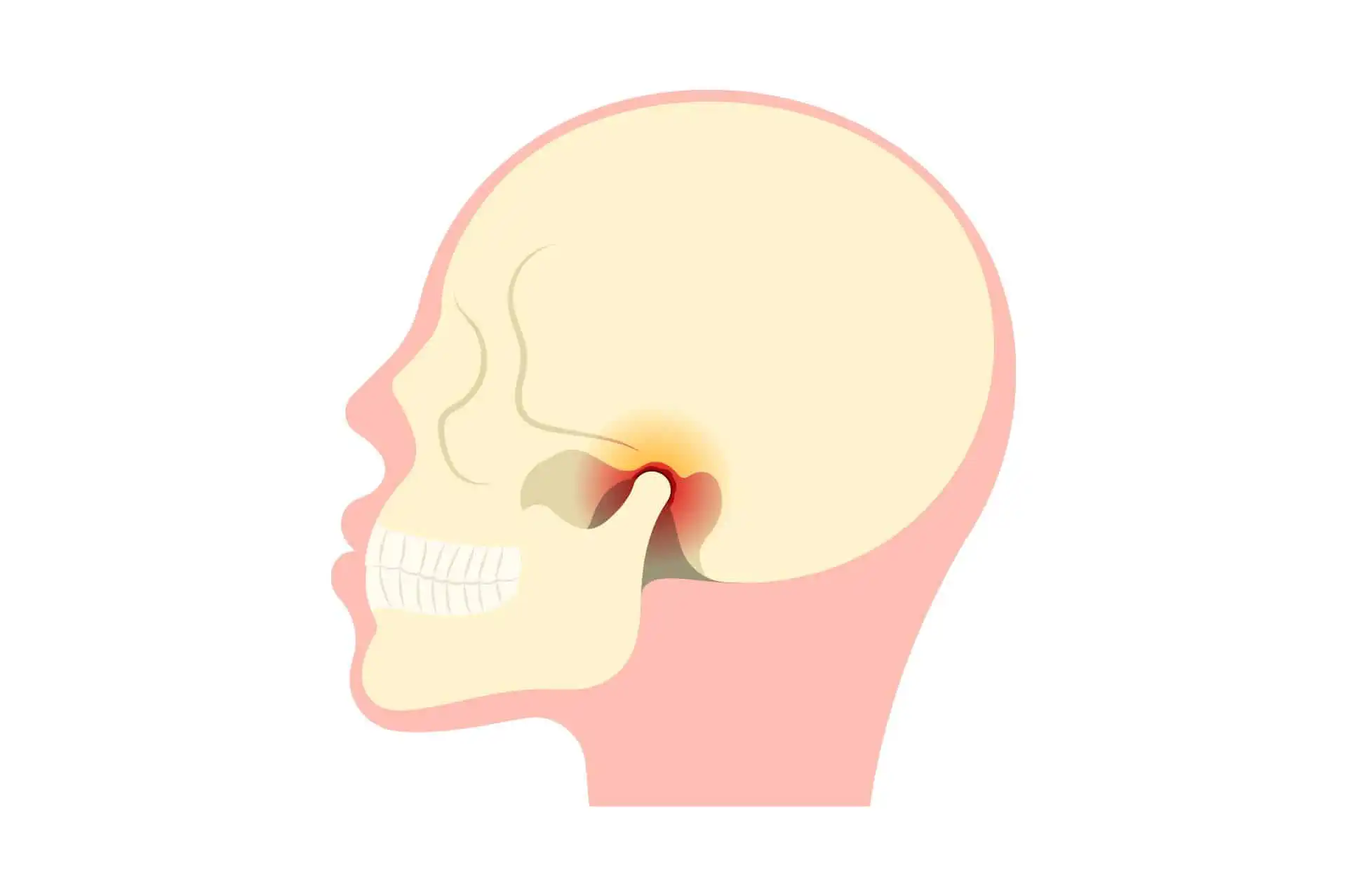
Temporomandibular Joint (TMJ) & Disorders
The temporomandibular joint (TMJ) connects the lower jaw to the skull and allows essential movements such as opening and closing the mouth, chewing and speaking. Temporomandibular disorders (TMD) affect the muscles, articular disc and bones of the joint, causing pain and functional limitations.
Common symptoms
- Pain or tenderness in front of the ear or around the jaw
- Clicking or grinding sounds when opening or closing the mouth
- Limited mouth opening or jaw locking
- Headaches, neck pain or pain around the temples
- Pain or fatigue when chewing and sensitivity when eating hard foods
- Ear pain or tinnitus without an underlying ear condition, and dizziness in some cases
- Teeth grinding (bruxism) and enamel wear
Possible causes
- Muscle overuse, bruxism or teeth clenching
- Stress and poor posture, especially during prolonged computer or mobile phone use
- Bite abnormalities or orthodontic problems
- Trauma to the jaw or joint
- Degenerative joint conditions, such as osteoarthritis
- Anatomical variations of the TMJ disc
Diagnosis by a specialist
Panagiotis Sennis takes a detailed medical history and performs a clinical examination, assessing mouth opening, joint sounds and muscle tenderness. Depending on the findings, imaging examinations such as panoramic radiography, CBCT or MRI may be recommended to assess the bony structures and the articular disc.
Conservative treatment – first-line approach
- Patient education and changes in daily habits: avoiding wide yawning, chewing gum and hard foods.
- Medication: painkillers, anti-inflammatory medication and muscle relaxants when clinically indicated.
- Occlusal splints: help reduce the effects of bruxism and excessive muscle loading.
- Physiotherapy: targeted stretching and strengthening exercises, manual therapy, heat or cold therapy.
- Stress management: relaxation techniques, biofeedback and improved workplace ergonomics.
Interventional options when required
- Intra-articular injections with hyaluronic acid or corticosteroids in selected cases.
- Arthrocentesis or arthroscopy: minimally invasive techniques used to irrigate the joint, release adhesions and improve movement.
- Open surgery or joint reconstruction: rarely required and generally reserved for extensive degeneration, ankylosis or major anatomical abnormalities.
The aim of treatment is to reduce pain, improve jaw function and prevent recurrence through an individualized treatment plan.
Exercises & practical advice
- Warm compress: apply for 10–15 minutes to tender areas once or twice a day.
- Gentle jaw stretches: perform controlled mouth opening in front of a mirror without causing pain.
- Tongue position: place the tip of the tongue on the roof of the mouth, just behind the upper front teeth, while opening the mouth.
- Posture: keep the neck aligned and position the computer screen at eye level.
- Diet: choose soft foods during the acute phase and avoid hard or sticky foods.
The exercises above are general recommendations. A personalized exercise plan should follow a clinical assessment.
When should you seek specialist assessment promptly?
- Severe pain or jaw locking
- Progressive difficulty opening the mouth
- Symptoms that persist for more than 2–3 weeks despite conservative measures
- A history of trauma or significant tooth wear caused by bruxism
Frequently Asked Questions (FAQ)
Can TMJ dysfunction resolve on its own?
Symptoms often improve with conservative treatment, although early assessment helps identify the cause and guide appropriate management.
Do clicking sounds always indicate a problem?
Not necessarily. When clicking is not accompanied by pain or restricted movement, monitoring may be sufficient.
Is surgery always necessary?
No. Most cases are managed successfully with conservative treatment.
Do occlusal splints help?
They can be effective when they are properly designed, prescribed for the appropriate indication and used consistently.
Temporomandibular Disorders vs TMJ Syndrome
| Feature | Temporomandibular Disorders (TMD) | TMJ Syndrome |
|---|---|---|
| Definition | An umbrella term covering disorders that affect the TMJ, muscles and related structures. | A clinical term describing the group of symptoms associated with TMJ disorders. |
| Includes | Myofascial pain, disc displacement, osteoarthritis, traumatic disorders, inflammation and other conditions. | A combination of symptoms such as pain, clicking or grinding sounds and difficulty opening the mouth. |
| Symptoms | Depend on the specific underlying disorder. | Commonly includes pain, joint sounds and limited or impaired jaw movement. |
| Diagnosis | Based on the medical history, clinical examination and imaging such as MRI or CBCT when required. | Based on the presence and pattern of characteristic symptoms. |
| Relationship | Refers to the individual disorders affecting the joint and surrounding structures. | Refers to the overall clinical presentation that results from one or more TMJ disorders. |
Why choose Panagiotis Sennis?
- Specialist expertise in Oral & Maxillofacial Surgery
- Comprehensive care that includes diagnosis, individualized splint therapy and collaboration with physiotherapists or orthodontists when required
- Modern minimally invasive techniques when clinically indicated
Book an appointment
Contact us to arrange an assessment and receive an individualized treatment plan.
21 0682 4604