

Computer-Guided Dental Implant Placement
Dr Panagiotis Sennis and his team at the Athens Oral & Maxillofacial Surgery Centre help patients restore healthy, natural-looking smiles and proper oral function. When tooth loss occurs, one of the most advanced options available is computer-guided dental implant placement.
What is computer-guided implant dentistry?
Computer-guided implant dentistry is a modern approach that uses digital planning to determine the position, angle and depth of each implant before surgery.
This allows the surgeon to plan implant placement according to the patient’s individual anatomy and the requirements of the final prosthetic restoration. In selected cases, immediate loading may also be possible, allowing a temporary restoration to be placed shortly after implant surgery.
Computer-guided implant placement offers several advantages. It improves surgical precision, helps protect important anatomical structures and, in suitable cases, can reduce the extent and duration of the procedure.
Dental implants – a stable solution for replacing missing teeth
Dental implants provide a stable and functional option for replacing one or more missing teeth. Computer-guided planning helps the surgeon place the implants accurately according to the available bone and the planned position of the final teeth.
This approach also allows the surgical and prosthetic stages of treatment to be planned together from the outset.
Our specialist team guides patients through every stage of the process. During the initial consultation, we assess the available options for dental implant restoration as well as alternative treatments when appropriate.
The treatment plan is based on each patient’s needs, anatomy, oral health and lifestyle.
Dental implants – the procedure
Patients who wish to replace one or more missing teeth with dental implants can ask whether computer-guided implant surgery is suitable for their case.
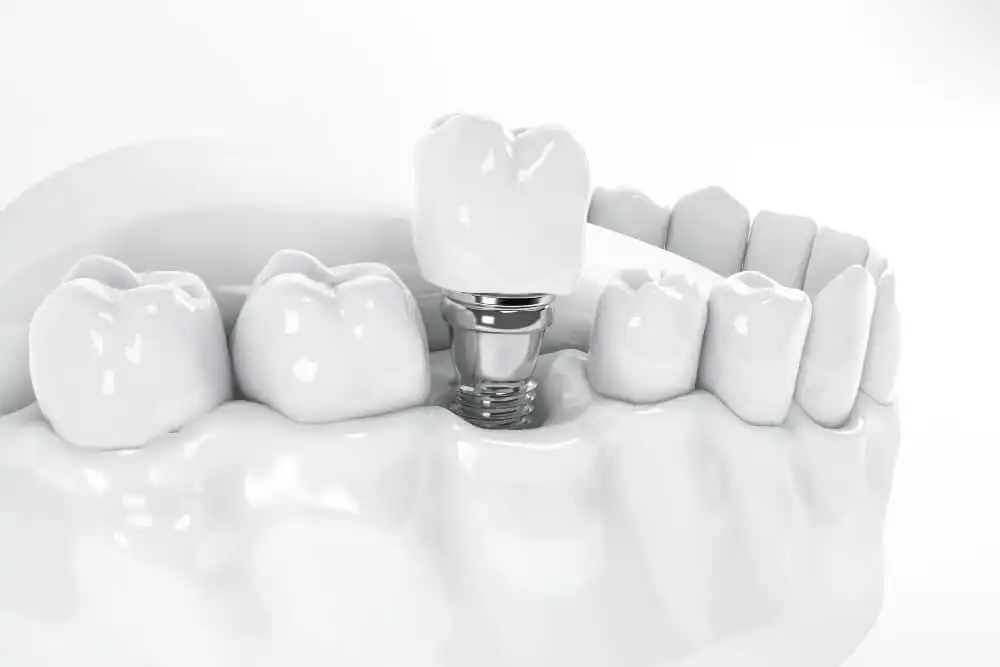
A dental implant is surgically placed into the jawbone, where it acts as an artificial tooth root. After the implant has integrated with the surrounding bone, it can support a dental crown or another type of prosthetic restoration.
Accurate positioning is an important part of implant treatment. For this reason, Dr Panagiotis Sennis uses computer-guided planning when clinically appropriate to determine the optimal implant position within the jaw.
When treatment is properly planned and completed, the final restoration is designed to look natural and restore normal function during speaking and chewing.
Dental implants are made from biocompatible materials and, with good oral hygiene, regular follow-up and appropriate care, they can provide a long-term solution for missing teeth.
Who is a candidate for dental implants?
Dental implants require sufficient bone to provide adequate support and stability.
During the initial consultation, the surgeon performs a clinical examination and reviews appropriate imaging to assess the quantity and quality of the available bone. Three-dimensional imaging, such as CBCT, may also be used to evaluate the anatomy in greater detail and plan implant placement accurately.
Other factors, including general health, oral hygiene, gum health and individual treatment needs, are also considered before deciding whether implant treatment is appropriate.
Schedule an appointment with Dr Panagiotis Sennis at the Athens Oral & Maxillofacial Surgery Centre to learn more about computer-guided dental implant placement and whether this treatment is suitable for your needs.